Croatia Just Won Europe’s Campsite Quality Crown – and the Cheap Window Is Starting to Close

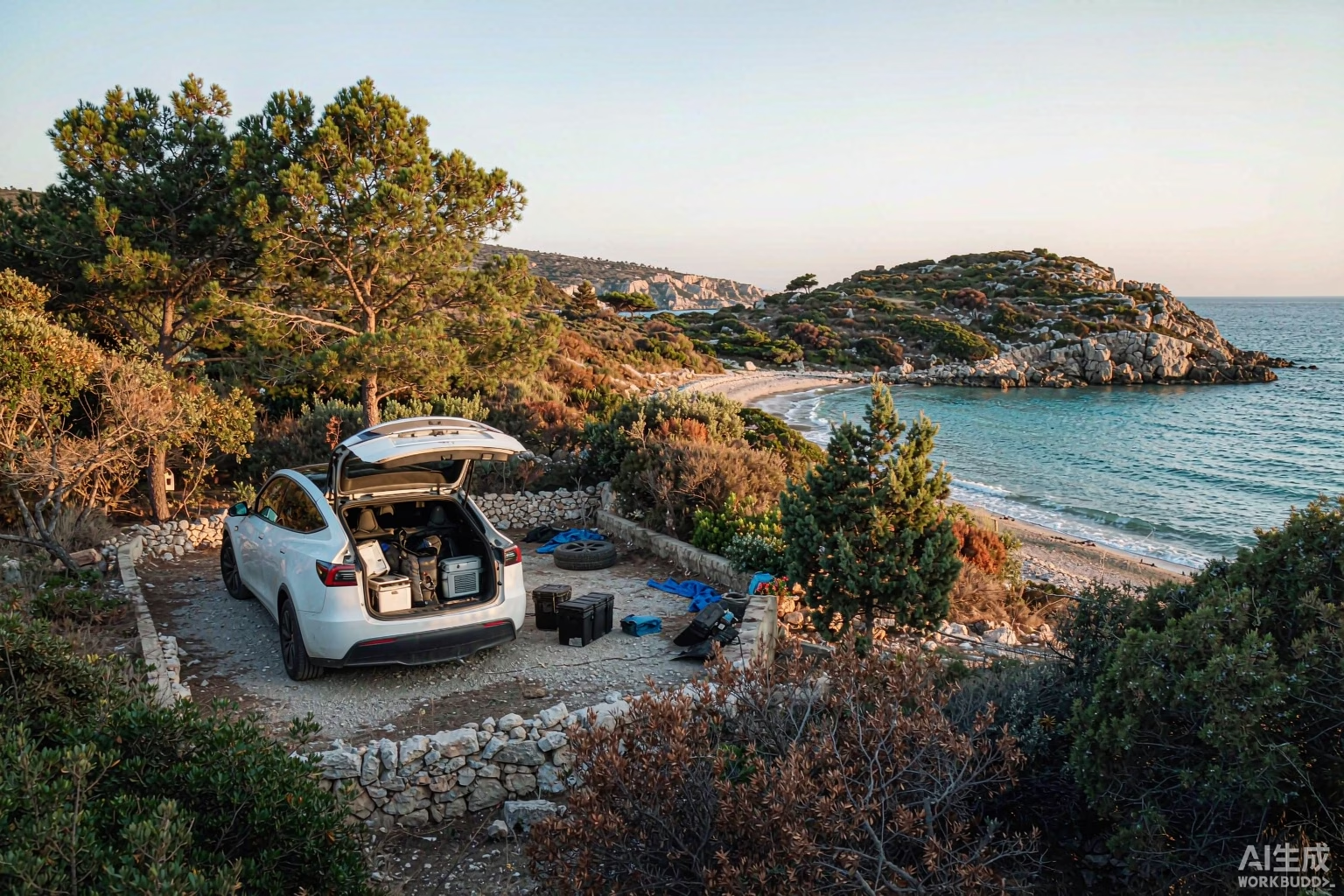
Something quietly significant happened in Croatian camping this week, and it was announced in a hotel conference room in Terme Tuhelj rather than on a beach.
PiNCAMP – the camping platform owned by ADAC, Germany’s largest automobile club – says Croatia will lead the European campsite quality ranking for the first time in 2027. The number of Croatian sites carrying the ADAC Superplatz label rises to 29. It was announced at the 20th Croatian Camping Congress, which ran from 19 to 21 October.
For anyone who still files Croatia under “cheap and a bit basic”, that is worth a second look. And for anyone planning 2027, it is a warning about prices.
The transformation, in four numbers
- 2007: 13 four-star campsites in the entire country, and not a single five-star one
- 2025: 82 four-star campsites, nine of which made five-star
- 58% of Croatian camping capacity now sits in the four and five-star categories
- Half of Croatian campsites are four or five-star, and they account for 20% of all overnight stays in the country – not 20% of camping nights, 20% of every night sold in Croatia
There is also a loyalty stat that tells you more than any star rating: 50% of guests have come back seven or more times. People do not return seven times to a place with bad showers.
And the season held up
From 1 January to 11 October 2026, Croatian campsites took almost 3.4 million arrivals and 21.4 million overnight stays – level with 2025, which was the best year in the history of Croatian camping.
Germany, Slovenia and Austria supply more than 60% of those nights. Domestic guests were up 9.7%. And camping now accounts for 23% of all overnight stays in commercial accommodation, with an average stay of 6.2 days – the longest of any accommodation type in the country, hotels included.
Read that last one again. People stay longer in a tent or a campervan than in a hotel. That is not a budget story. That is a story about people who have decided this is the way they want to travel.
Now the bill, because it is going up
Quality costs money, and the invoice is arriving. Two examples from this week alone:
- Carinthia, Austria: from early November 2026 the tourist tax rises from EUR 2.70 to EUR 4.00 per person per night. Operators have asked for stays under 24 hours to be exempted – which is a fairly precise description of a campervan stopping for one night on the way south
- Schuttern, Germany: camping there becomes more expensive from 2027
These are small numbers on their own. Add them up: two adults, fourteen nights, and a EUR 1.30 nightly increase is EUR 36 on the bill before you have bought anything. Do that in five countries on one trip and it becomes a tank of fuel.
Here is the useful conclusion, and it is the same one every year: the pitch fee is not the line item that grows. The per-person charge is. Which means the only genuinely inflation-proof part of a camping holiday is the part you bring with you – your own power, your own fridge, your own bed, your own kitchen. Nobody has yet found a way to tax a battery you already own.
What late October in Croatia actually looks like
Set expectations correctly, because the marketing photos are from July:
- Most large coastal resorts close in mid-to-late October. A limited number stay open year round, mostly in Istria and around Zadar and Split. Check the opening dates on the site’s own page before you drive 1,300 km, not the booking platform’s listing
- The sea is not July sea. Early October is still swimmable for the hardy; November is not. What you get instead is a high-teens midday temperature, empty pitches and no queue for the showers
- The bura is real. The cold northerly wind arrives without much warning. If you are sleeping in a rooftop tent, that is the night you want to be inside the car with the climate control on
- Ferries thin out. Off-season timetables run fewer crossings, and a car needs a reservation where a foot passenger does not
The ferry thing is a bigger deal than people admit
The Suisse Caravan Salon opened in Bern on 22 October and runs to the 26th, and its own headline content this year is not about vehicles. It is a video asking whether ferry travel is stressful or relaxing, aimed at people planning new routes that include a crossing.
That is a very honest topic for a caravan show. Ports are the worst 45 minutes of any touring trip: queues, lane changes, unfamiliar languages, a timetable that does not care about you. The advice from the show’s own expert is unglamorous and correct – treat the port as its own leg of the journey, arrive early, know your lane, and keep the paperwork where you can reach it without unpacking the boot.
Which is, incidentally, what a sorted boot is for in the first place.
What to be sceptical about
- A quality ranking is not a value ranking. Croatia winning on quality is exactly why it is no longer the cheap option
- Superplatz is an inspection scheme, not a consumer review site. 29 sites out of hundreds – useful as a filter, not as a guarantee
- 21.4 million nights is flat, not growth. The sector held its record. It did not beat it
- Late-October camping on the Adriatic is a niche of a niche. Beautiful, quiet and genuinely possible – but plan around closed sites rather than assuming they are open
Why a Tesla is the right vehicle for this particular trip
Not because it is fast. Because the economics of self-sufficiency finally line up with the economics of the campsite. A car with a flat floor, a sealed cabin, silent overnight heating and a 2 kWh battery in the boot means the rising per-person charge on the pitch is the only thing you still have to pay for.
The kit that does it:
- Tesla Inflatable Air Mattress – a real bed inside the car, which matters more on a windy coastal night than any view
- Tesla Roof Top Tent – or sleep up top when the bura is not blowing and the stars are out
- 2048Wh LiFePO4 Portable Power Station – 2048Wh for the fridge, the lights and everything else you would otherwise pay a hook-up fee for
- 35L Dual-Zone Compressor Fridge – a compressor fridge that runs on 12V and does not need ice, which matters when the nearest shop closes in October
- Tesla Induction Cooktop – a hot dinner with the doors shut and the wind outside
- Magnetic Mesh Bug Screens – the mosquitoes of the Neretva delta do not observe the end of the season
- Tesla Trunk Organiser Box – four countries, one boot, and everything still findable on the fourth morning
Croatia earned this. Go and see why – just go in the shoulder season, with the car packed properly, and check that the gate is still open.