Tesla Cut $5 Billion From This Year’s Spending Plan – and the Quiet Announcement Says More Than the Merger Talk

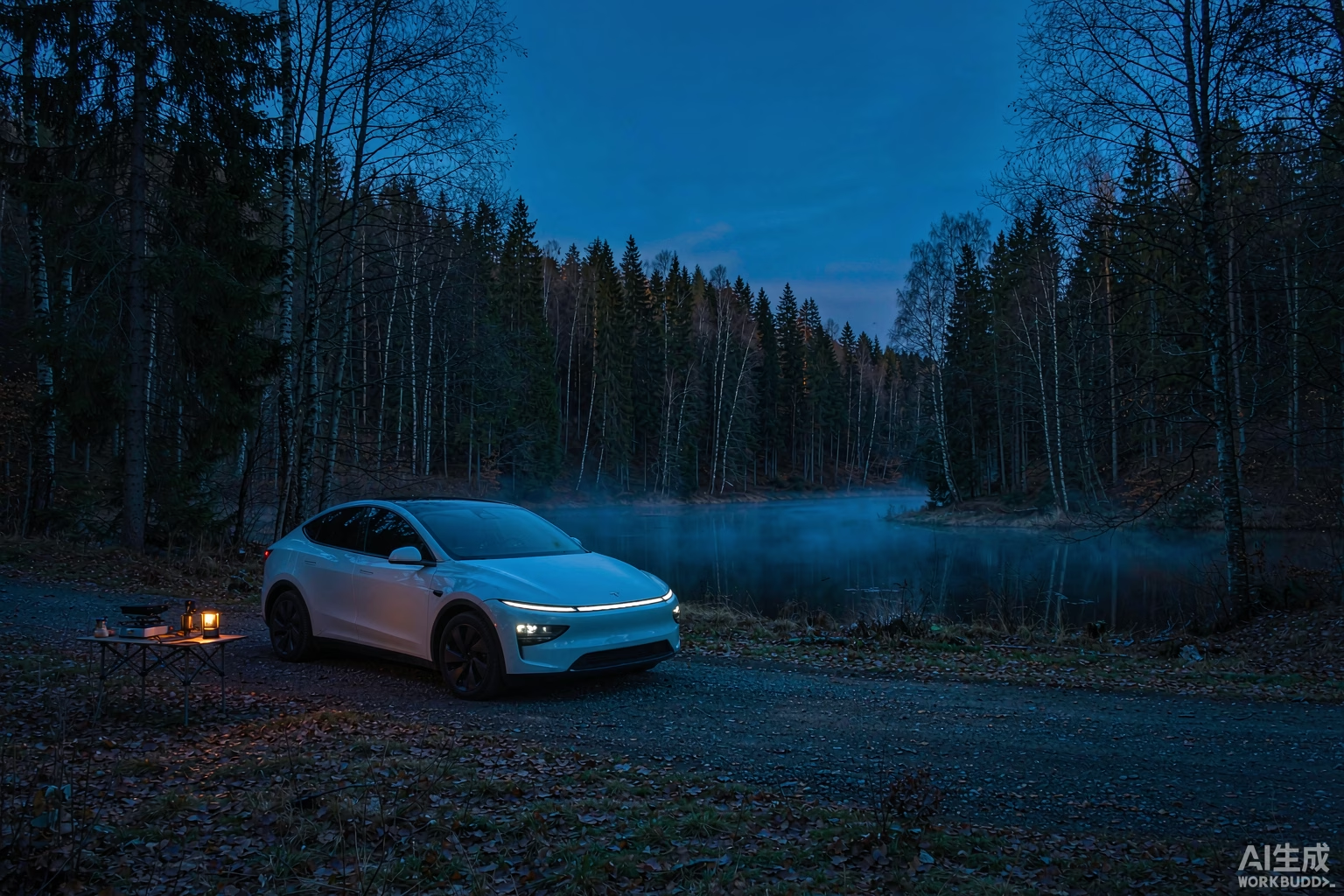
Two Tesla stories reached Europe this week. One of them was everywhere. The other one was buried under it, and it is the one that affects whether you sleep in this car in five years’ time.
The loud story: on Thursday, SpaceX told regulators that any merger with Tesla would need the approval of its controlling shareholder – Elon Musk – as well as its special committee and its board. Musk said on Tuesday that combining the two companies would be “a good idea” and that both sides had set up special committees. SpaceX’s filing added the part the headlines skipped: no determination has been made. Tesla took no questions on it during its earnings call. The shares closed Thursday at USD 374.58, down 3.08%.
The quiet story, from that same earnings call: Tesla’s finance chief cut 2026 capital spending guidance to about USD 20 billion, from “more than USD 25 billion”. Five billion dollars, quietly removed from the plan, one sentence before the questions started.
That is the paragraph worth reading twice if you own one of these cars and camp in it.
First, the merger, briefly, because it is not what you think
A merger is a share-swap between two private and public companies. It moves ownership, board seats and reporting lines. It does not change the car in your driveway, the charge port standard, the software on your screen, or how flat the boot floor is.
What it does change is attention. Analysts covering the stock spent this week arguing about who gets what in a deal rather than about cars, which is exactly what you would expect. Reuters reported that Musk’s public endorsement had rattled people involved in the talks, because it invites shareholder scrutiny and could push the timetable out by weeks. That is a corporate story with a corporate timeline. Nothing about it will be resolved by the time you next go camping.
Now the five billion
Tesla is not running out of money – it is choosing where the money goes. The capex cut is funded “primarily from cash flows from operations”, and the company has lined up up to USD 30 billion of borrowing capacity that it says it will not touch this year. Management also said spending gets “more meaningful” in 2027 and “noticeable in the tens of billions” in 2028.
So this is a deferral, not a retreat. Read where the money is actually pointed:
- Terafab – tens of billions of dollars of equipment through early 2028, “north of USD 100 billion” long term, with real production in late 2028. Tesla and SpaceX are still arguing over who pays for which part
- Optimus – the Fremont line is now making its first production-quality robots. Getting to 20,000 a week needs “at least a year, maybe a little longer”, and deliveries to outside customers start around the end of 2027
- Robotaxi – Dallas next month, more cities before the end of the year, 24/7 operation targeted for December, and Cybercabs to customers by the end of 2026
- AI training compute – up from about 230 megawatts in September to 400 by December
- Megapack – nearly sold out for 2027, with Megafactory Texas now producing
- Semi – in volume production in Nevada, 25,000 a year of installed capacity
Scan that list for a car you could sleep in. It is not there. Chips, robots, taxis, grid batteries, trucks. The camper van is still missing from the plan, and it has now been missing through several rounds of guidance.
There is also a sentence from the call worth keeping: Tesla is “aiming for 5 million vehicles a year by approximately 2030”, and deliveries in the quarter were limited by battery supply rather than demand. The backlog is the largest in four years. Which means the practical advice has not changed either: if you want a new one for next spring, order early, and if you want it now, buy used.
The number that actually changes your drive
Here is the figure buried in the shareholder letter that nobody quoted: Tesla says FSD now has 100,000 users in Europe. Worldwide there are 1.74 million paid subscribers, and in North America more than 75% of new deliveries took paid FSD at the point of sale, up from just over 55% in the previous quarter.
Why should a camper care about an attach rate? Because of what it does to a long drive. Munich to the Croatian coast, Berlin to the Dolomites, Utrecht to the Ardèche – these are 900 to 1,300 km of motorway, and motorway is the least interesting part of any camping trip. It is also the part that leaves you too tired to cook when you arrive.
Assisted driving on that leg does not make the trip shorter. It makes you arrive with something left. You get out, and instead of lying down you put the kettle on. That is the whole benefit, and it is a real one.
Two honest caveats. In Europe, FSD is supervised: your hands stay involved and the approval is country by country, so a feature that works on your commute may not be available 800 km south. And Tesla’s own date for unsupervised driving in customer cars is “around Q2 2027” via the V15 software release – a target that has moved before and will probably move again. Treat it as a direction, not a delivery date.
The line Europeans should actually be pleased about
Gigafactory Berlin had record production in the quarter. That is the sentence with consequences on this side of the Atlantic: more cars built in Europe means shorter waits, a deeper used market in three years, and campsites that have already seen an electric car before yours turns up. Quietly, that is a bigger deal for camping in Europe than a merger filing in Texas.
What to be sceptical about
- No deal exists. A special committee, a filing and a comment from the controlling shareholder is not an agreement. Reuters’ USD 3.5 trillion figure is reporting, not a term sheet
- A capex cut is a forecast, not cash in the bank. The same company has raised guidance again within a quarter before now
- 75% attach is North America. Europe is a different market with different rules, and 100,000 users is a good number in a market of millions of cars
- The share price fell 3%, not 30%. It is still far above its 52-week low of USD 297.38 and below the high of USD 498.83. Do not make a buying decision, or a selling one, because of a blog post about a filing
What none of it changes
The boot still folds flat. Camp Mode still heats the cabin overnight with nothing burning. Late October is still the cheapest, emptiest, most beautiful fortnight to be on a pitch in Europe, and it is happening now.
The kit that turns the car into the base camp:
- 2048Wh LiFePO4 Portable Power Station – 2048Wh so lights, laptops and a pump never touch the range you need to get home
- 35L Dual-Zone Compressor Fridge – dual-zone, so day three still tastes like day one
- Tesla Inflatable Air Mattress – turns the car itself into a proper bed, and packs away in the morning
- Tesla Trunk Organiser Box – because a 2,000-litre boot becomes chaos by the second morning
- Tablet Mount Holder – navigation and charging stops at eye level instead of balanced on the dash
Read the filing, ignore the ticker, and go and use the car.