Snow Is Coming to the Alps This Week – and It’s the Best Test Your Winter Camping Kit Will Get

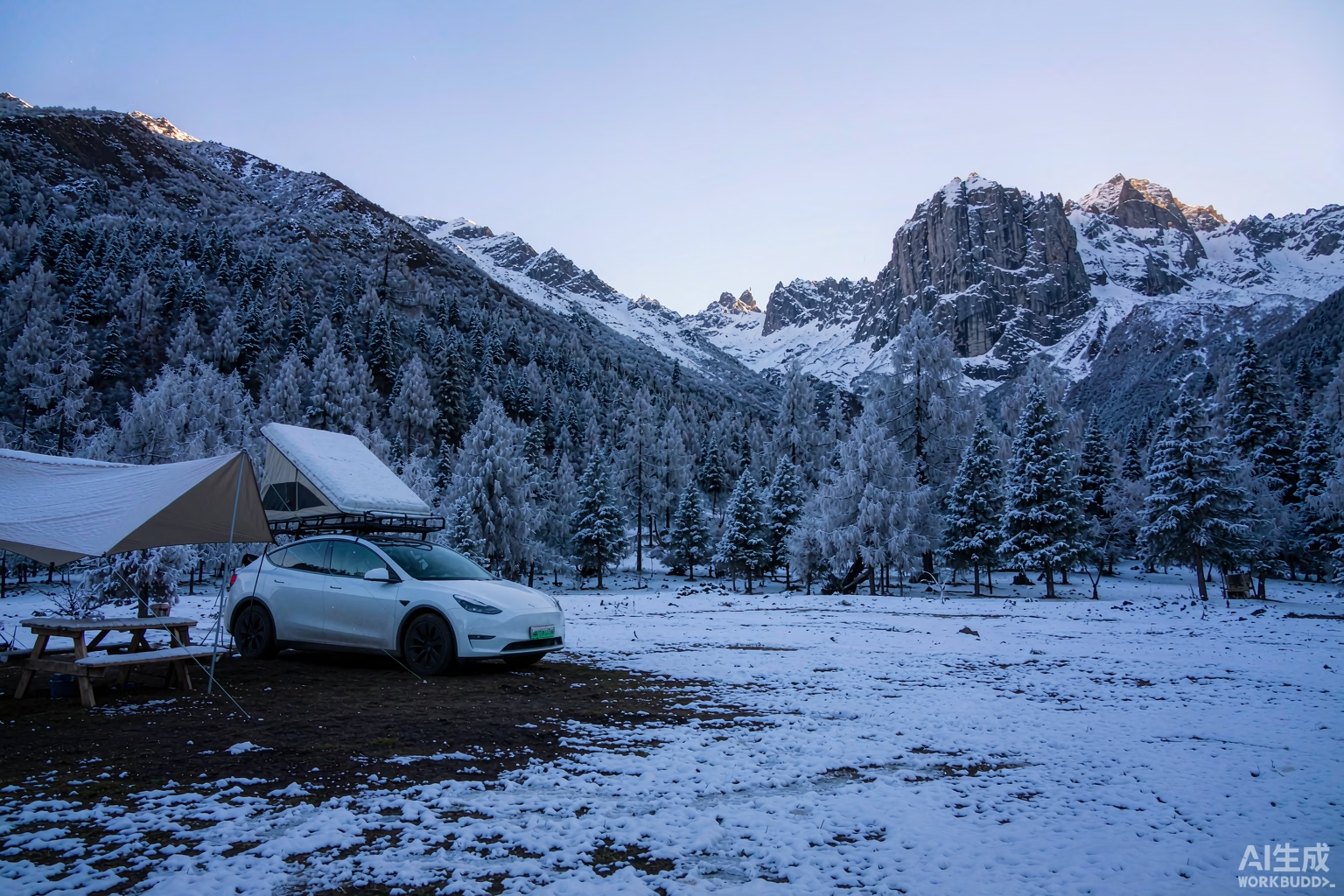
Autumn in the Alps has been mild and sunny for most of October. That is about to end. Forecasters are pointing at 23 to 25 October 2026 for the first proper snow of the season, with 10 to 35cm possible from around 1,300 to 1,500 metres, and drifts higher than that where the wind stacks it up.
One honest caveat up front: this is a preliminary forecast and the dates could shift by a couple of days either way. Anything beyond about 48 hours out has limited reliability. Check your national met service and the road operator before you drive.
Where, and how much
The areas flagged are the France-Italy border, southern and eastern Switzerland, northern Italy, and south-western and central-western Austria, plus parts of Scandinavia. SnowStash’s resort numbers have Monterosa Ski in Italy on 64cm over the next fortnight, Blatten Belalp in Switzerland on 55cm and Verbier on 43cm – but almost all of that lands on high glaciers above 3,000m, not on the valley pitches.
GeoSphere Austria expects the snow line to drop below 2,000m by Wednesday evening and possibly below 1,500m locally overnight into Thursday. That does not mean every village at that height wakes up white; the line moves region by region and the precipitation can ease off just as the cold air arrives. A second system is signalled for Friday and Saturday, mostly hitting France and Italy from around 1,600 to 2,000m.
The Dolomites are the exception: mostly rain at valley level, with Meteo Trentino warning of large precipitation totals between Tuesday evening and Thursday morning. Wet, not white.
The wind is the real problem, not the depth. Gusts of up to 120 km/h at around 3,000m are forecast on the northern side of the Alps, which turns fresh snow into blizzard and closes mountain roads and lifts without much warning.
Check the tyre rules before you cross a border
Europe is a patchwork, and this is the week it starts to bite:
- Austria: winter tyres are mandatory in winter conditions, and the standard window runs 1 November to 15 April
- France: the mountain law runs roughly 1 November to 31 March – in designated mountain areas you must either have winter tyres or carry snow chains in the boot
- Switzerland: no blanket legal requirement, but insurance and liability get extremely unpleasant if you cause a crash on summer tyres in snow
- Germany: situational – winter tyres are required when conditions are wintry, and fines apply
- Italy: requirements vary by region and by road, so check the specific route rather than the country
Chains are worth having in the frunk regardless of what the law says. So is a small folding shovel, a torch, a warm layer you can reach without unpacking the boot, and a scraper.
What cold actually does to a Tesla at a pitch
- Range drops, and regen comes back late. A cold battery will not accept full regenerative braking until it warms up, so the first few kilometres of a frosty morning feel odd. Plan for noticeably higher consumption and arrive with more margin than you would in September.
- Precondition before you charge. Navigating to a Supercharger on the car’s own route planner warms the pack first. Turning up cold means sitting there for a long time.
- Pre-heat while still plugged in if the site has a hook-up. It is free warmth.
- Camp Mode consumption climbs below freezing. A night at a few degrees below zero costs materially more than a mild autumn night. Budget roughly 2-3% an hour at mild temperatures and noticeably more in a hard frost – and never let a night at the pitch take the car below the charge you need to leave.
- Condensation gets worse, not better. Two adults breathe out a surprising amount of water. Crack a window, wipe the glass in the morning, and dry the mattress before you pack it or it will smell by spring.
- Clear the roof before you drive. Snow and ice left on a rooftop tent slides forward onto the windscreen the first time you brake hard. This is the one people forget.
And the genuine safety advantage: an electric car has no exhaust. Being snowed in overnight in a combustion vehicle is a real carbon-monoxide risk if the tailpipe gets blocked; a Tesla simply does not have that failure mode. Camp Mode will hold the cabin at temperature all night with nothing burning and nothing to vent. It is still not an excuse to park somewhere you should not – avalanche terrain and exposed high passes do not care what powers your car.
Why people are doing this on purpose
This is not a fringe hobby any more. The Caravan Salon Austria in Wels drew 46,235 visitors across 14-18 October 2026, with more than 20% more exhibitors than last year, 55 vehicle brands, and a new Hall 22 “adVANture outdoor” area aimed squarely at vanlife and travelling away from classic campsites. The show counted 1,404 overnight stays on its own pitches during the five days.
In other words: cold-weather, self-sufficient, car-based camping went from a niche to an entire exhibition hall. The Alps getting a dusting this week is not the end of the season. It is the start of the cheap, empty, genuinely beautiful one.
The kit that makes it comfortable rather than character-building:
- Tesla Roof Top Tent – off the snow, off the mud, and up in minutes with cold hands
- Tesla Inflatable Air Mattress – or sleep inside the car with the climate control on and the boot still full
- 2048Wh LiFePO4 Portable Power Station – 2048Wh so the lights, the pump and the laptops never touch the range you need to drive out again
- Tesla Induction Cooktop – a hot meal with the doors shut and the heating on
- 35L Dual-Zone Compressor Fridge – dual-zone; in the cold it doubles as a very well-insulated cupboard
- Tesla Trunk Organiser Box – because everything you own is wet and the boot needs to stay sorted
- Tablet Mount Holder – for the road status page you should have opened before you set off
Check the forecast, check the pass, clear the roof, and go.