Germany Is Paying People Up to €6,000 to Buy a Model Y – and That’s Basically Your Camping Budget

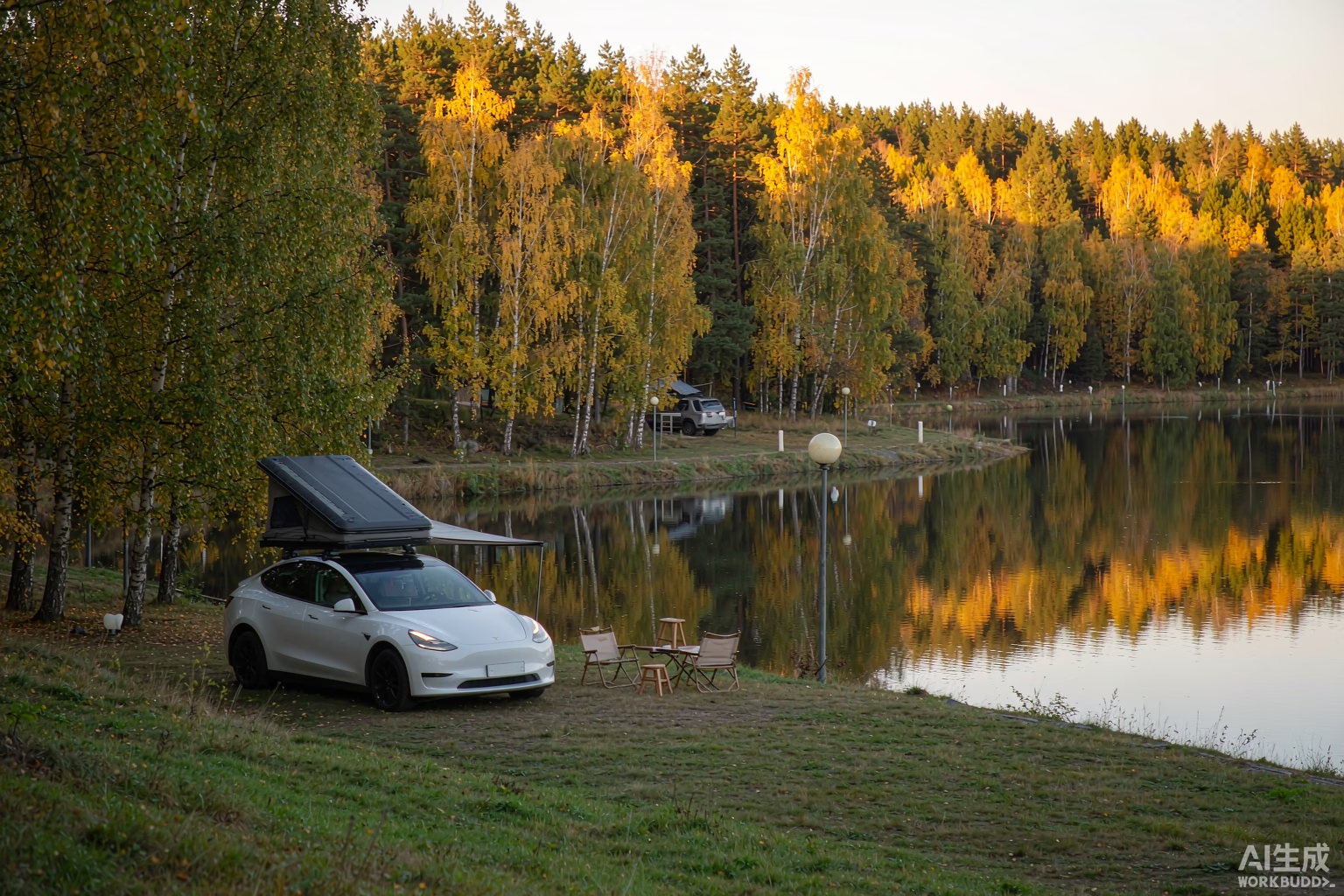
Germany restarted its electric car purchase grant this year, and the numbers from the scheme just landed. If you were guessing which car ordinary German households are using it to buy, you probably wouldn’t guess the answer – and if you camp, you should care quite a lot.
The Tesla Model Y is the most-subsidised car in Germany. Not the most-subsidised electric SUV. The most-subsidised car, of any type, ahead of everything Volkswagen, Skoda, Citroën and Dacia can put on the list.
The numbers, through 1 October 2026
A total of 97,790 vehicles had been approved for funding (8,196 of them plug-in hybrids). The top of the table looks like this:
- Tesla Model Y – 10,744, about 11% of every subsidy handed out
- Skoda Elroq – 5,710
- Tesla Model 3 – 3,845
- Citroën ë-C3 – 3,583
- Leapmotor T03 – 3,561
- VW ID.3 – 3,541
- Hyundai Inster – 3,337
- BMW iX1 – 2,939
- Cupra Born – 2,806
- Dacia Spring – 2,402
Worth noting what isn’t on that list near the top: the subsidy has not simply become a discount for the cheapest small cars. The Model Y, Model 3 and BMW iX1 all sit high because payments are means-tested, so a bigger car can qualify for a bigger amount.
How the scheme actually works
- Applications have been open since 19 May 2026, and it applies retroactively to cars registered since 1 January 2026
- The grant runs from €1,500 to €6,000, depending on household income, family size and the vehicle
- There is €3 billion available for 2026 to 2029, which the government estimates covers roughly 800,000 vehicles
- Half of applicants had a household income of no more than €45,000 a year; three quarters were at or below €60,000
That last point is the one that matters. This is not a tax break for company directors. It is going to nurses, teachers, mechanics and warehouse shifts – which is to say, precisely the households that make up the bulk of Europe’s camping market.
Two honest caveats
First, these are approved subsidy applications, not total registrations. The Elroq may well be selling more cars overall; it just isn’t collecting as much grant money. Don’t read the table as a sales chart.
Second, the published figures contain a discrepancy we can’t reconcile: the Model Y and Model 3 account for 14,589 approvals between them, but Tesla appears at group level with 12,155. That probably reflects different reporting dates or classification, and nobody has explained it yet. Treat both as approximate.
For completeness, by manufacturer group it runs Volkswagen 20,624, Stellantis 13,670, Tesla 12,155, Hyundai 10,415, Renault 8,396, BMW 6,085.
Why this is a camping story, not a car story
Because €1,500 to €6,000 is not pocket change. It is, almost exactly, the cost of turning a car you already own into a proper touring setup – and it arrives at the same time as the car.
It matters here more than anywhere because Germany is Europe’s biggest camping nation: more sites, more pitches and more nights outdoors than anywhere else on the continent, and the largest single group of foreign campers in Italy, Austria, Croatia and Denmark. Germans don’t quit in October either – plenty of sites stay open through winter, and October is when prices fall off a cliff.
And the car people are buying with the money happens to be unusually good at it.
What to do with the grant money
Camping kit has a clear order of importance, and it’s not the order the catalogues put it in.
First: somewhere dry to sleep. If you want to be off the ground and above the mud, the Tesla Roof Top Tent is the biggest single change you can make – it goes up in minutes, it doesn’t care how wet the pitch is, and it leaves the entire boot free for everything else. If you’d rather sleep inside, the Tesla Inflatable Air Mattress cut for the Tesla boot floor turns a flat-folding load bay into a genuine bed in about four minutes, with no awkward gap at the edge for a cold hip to find at three in the morning.
Second: power that isn’t your car. A 2048Wh LiFePO4 Portable Power Station runs lights, laptops, camera batteries, the water pump and the kettle all evening without touching the car’s own battery. That distinction sounds pedantic until you wake up to a full car instead of one you have to go and find a charger for. Add the 35L Dual-Zone Compressor Fridge and one supermarket shop at the start of the trip lasts the whole week, with one compartment set below zero.
Third: cooking without gas. The Tesla Induction Cooktop is the right answer in an electric car – fast, controllable to the degree, and no canister to squeeze into the frunk or dispose of at the end. Being able to run it straight off the power station is the whole point.
Then the cheap things that make it liveable. The Tesla Trunk Organiser Box is the least glamorous item on this list and the one you’ll thank yourself for on day three – without boot storage, a five-day trip becomes a permanent rummage. Magnetic Mesh Bug Screens let you keep air moving on a mild afternoon without inviting every flying insect in the region. And Tablet Mount Holder puts a screen somewhere you can actually use it for route planning, weather and something to watch when it gets dark at six.
What the car itself brings
You get over 2,000 litres of boot with the rear seats folded, flat, with no lip. You get Camp Mode, which heats or cools a sealed cabin all night with no flame, no exhaust and no carbon monoxide – the thing you absolutely cannot safely do with a petrol car or a gas heater in a closed space. You can start it from your phone before you leave the restaurant. And you arrive somewhere making no noise at all, which on a quiet German site after ten at night is a social advantage rather than an environmental lecture.
Three practical notes if you’re doing this in Germany
- Find a Stellplatz. Germany has tens of thousands of designated overnight pitches made specifically for sleeping in a vehicle, usually cheap, often with water and waste disposal. If you can sleep in your car, this is the easiest country in Europe to do it in.
- Buy the discount card. ACSI and ADAC camping guides take a real percentage off pitch fees in spring, autumn and winter. With this many sites to choose from, the card pays for itself inside four nights.
- Check it’s open. Not every site runs through winter, and it’s October. Ring ahead rather than arriving at a locked barrier – but do ring, because far more stay open than people assume.
The short version
Germany decided to hand ordinary households between €1,500 and €6,000 to buy an electric car, and the single most popular car to spend it on is one with a flat-folding 2,000-litre boot and all-night heating that produces no exhaust.
Whatever you think of the policy, the practical outcome is that a lot of families in Europe’s biggest camping nation just got handed the money for their first serious camping kit at exactly the moment they bought something to camp in.