The Model Y Just Became the Best-Selling Car in All Five Nordic Countries – and There’s Nowhere Better to Camp It

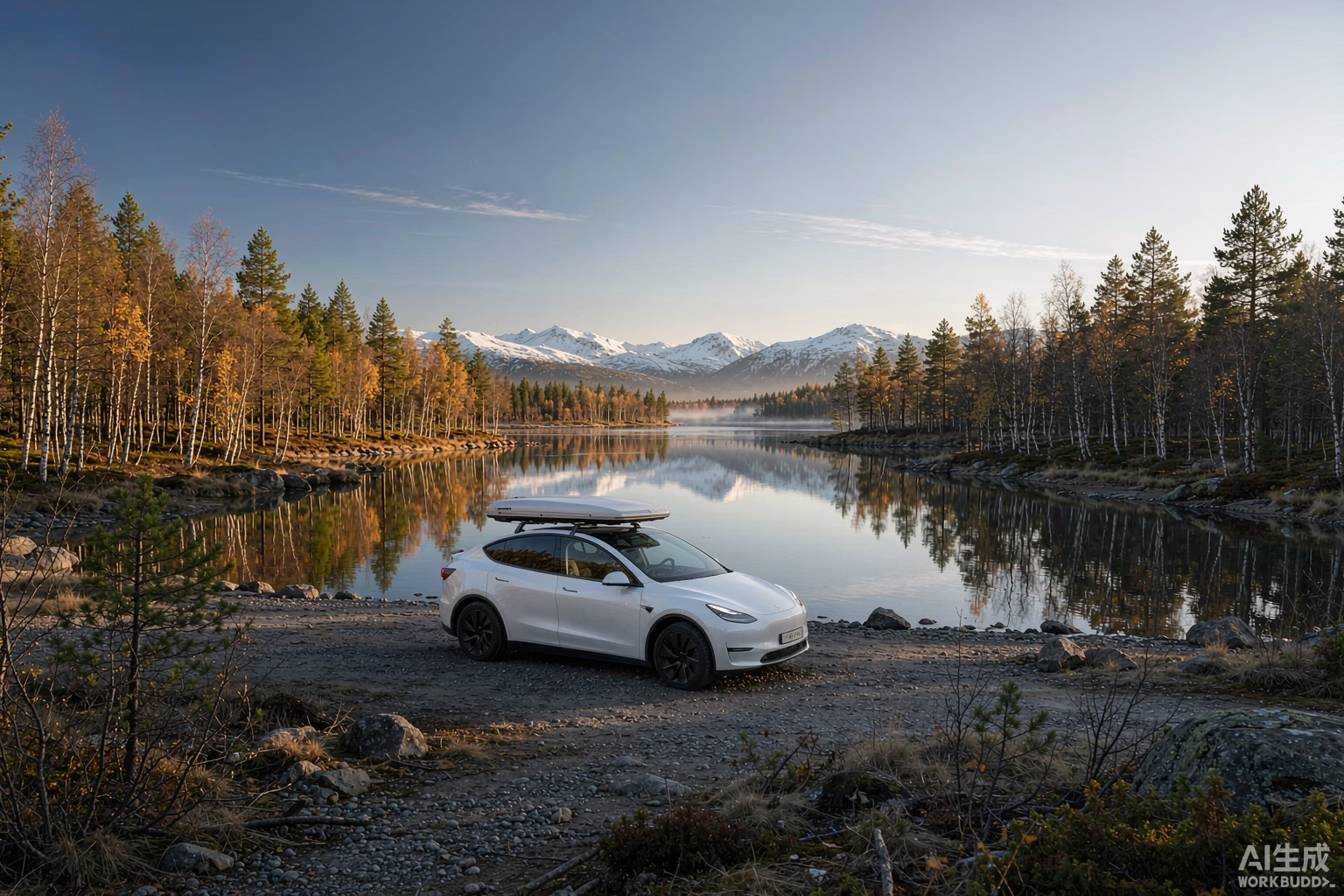
Tesla said something on 12 October that is easy to skim past and hard to overstate: in September, the Model Y was the best-selling passenger car in all five Nordic countries – Denmark, Finland, Iceland, Norway and Sweden.
Not the best-selling electric car. The best-selling car, in every one of them, in the same month.
And in Norway it wasn’t even close
- Norway: 4,810 Model Ys – 25.7% of the entire new car market. More than one in four new cars registered in the country
- The nearest rival, the Volvo EX30, managed 576
- Tesla as a brand: 4,935 registrations, a 26.34% share, first overall, and roughly 6,987 ahead of second-placed Toyota
- Sweden: 2,330 Model Ys, up 68% year on year, ahead of the Volvo XC60 on 1,262 – in a month where electric cars were 49% of all new car sales
- Denmark: 1,226 Model Ys, with the Model 3 right behind on 1,073
The longer-term numbers are just as striking. Tesla has now delivered more than 200,000 cars in Norway – about a fifth of all the electric cars in the country – and more than 100,000 in Denmark. Three quarters of Norwegian Tesla owners buy another Tesla when they change cars.
Giga Berlin is responding: Model Y output goes from 5,000 to 7,500 a week from this month, a 20% increase, with another 1,000 people hired.
Why this matters far more in the Nordics than anywhere else
Because the Nordics are the one part of Europe where you are allowed to do the thing a car like this makes possible.
It’s called the right to roam – allemansrätten in Swedish, allemannsretten in Norwegian, jokamiehenoikeus in Finnish. The basic idea is that you can move through open countryside, walk across land that belongs to someone else, pick the berries, and sleep there for a short while, whoever owns it. The Swedish Environmental Protection Agency sums up the whole deal in four words: don’t disturb, don’t destroy.
In most of Europe that idea has been legislated out of existence over the last century. In Scandinavia it’s still the default.
The rules, country by country
Sweden is the most relaxed and the best place for a first attempt. Pitch a tent for a night or two – that’s the rule of thumb – on solid ground, out of sight and earshot of homes, off farmland and grazing, and take your rubbish with you. Two or three tents is fine; a bigger group should ask. Municipalities can and do ban tents in parks and sports grounds, so it’s a countryside right, not a town one.
Norway writes it into law and gives you actual numbers:
- Camp at least 150 metres from any inhabited house or cabin
- Maximum two nights in the same spot on lowland
- Only on uncultivated land (utmark) – fields, meadows, gardens and fenced pasture are out
- Open fires are banned from 15 April to 15 September in or near forest and uncultivated land
Read that last one again, because it’s the interesting one for anyone reading this in October: the fire ban ends on 15 September. From now until 15 April, a small, clearly safe fire is legal again. Use gravel or sand, use fallen wood, keep it away from rock faces, and check whether the local council has added a ban of its own. In July you couldn’t. This month you can.
Finland gives you the same freedom to walk and camp temporarily at a reasonable distance from homes – but an open campfire is not part of it. You need the landowner’s permission, or a marked fire site in a national park.
Denmark is the exception. There’s no general right to roam. Tents overnight only in designated areas. Don’t assume.
The bit everyone gets wrong
The right to roam applies to people – on foot, skis, bike or canoe. It does not apply to your car.
Driving off-road is a separate offence, and parking a vehicle wherever you like is not covered either. In practice that means: stay on legal parking, and sleep at proper campsites, Stellplätze or designated overnight areas. Norway’s popular spots have tightened this hard – Lofoten has detailed municipality-by-municipality tent bans, several places ban sleeping in vehicles between midnight and 06:00, new parking limits arrived on the E10 lay-bys in 2026, and Rondane’s main access car parks got a full overnight vehicle ban in July 2026. Check before you go, not after.
Fortunately, official sites are excellent and not expensive. Sweden has over 1,000 campgrounds, and a pitch runs roughly 300 to 450 SEK (about €27-40) a night in 2026. Camping accounts for somewhere between 44% and 50% of all Swedish tourist guest nights in summer, and 2025 set a record of 17.3 million guest nights, up 2.8%. This is not a fringe activity – it’s the mainstream way the country holidays.
Why October is actually the smart month up here
The mosquitoes are gone. Anyone who has camped in Lapland in July will tell you this alone is worth the trip. The aurora season has started – you need dark, clear nights, and you get neither in June. Everything is empty, and autumn colour in the birch forest is spectacular. And as noted, fires are legal again.
The trade-offs are real: short days, temperatures that drop below freezing overnight in the interior, and reindeer and moose on the road at dawn and dusk, which is not a joke on an unlit Norwegian county road.
This is where an electric car stops being a compromise and starts being an advantage. Camp Mode heats a sealed cabin all night with no flame and no exhaust – the exact thing you cannot safely do with a petrol car or a gas heater. You can set it from the app before you leave the evening’s fire. The Nordic Supercharger network is the densest in Europe. And it’s completely silent, which matters when you’ve parked somewhere quiet enough to hear the aurora.
What to bring
Off-grid power first. A 2048Wh LiFePO4 Portable Power Station runs lights, laptops, camera batteries and the pump all evening without touching the car’s battery, so the car is still full in the morning – which matters a lot when the next charger is 200 km away through a mountain pass. Add the 35L Dual-Zone Compressor Fridge and you can do one big shop in Tromsø or Lillehammer and eat properly for a week, with one side frozen.
Cook on the Tesla Induction Cooktop rather than gas – no canister to dispose of, nothing to leak, and it works fine from the power station. Tesla Trunk Organiser Box is what stops a fortnight on the road turning into a permanent rummage, and Tablet Mount Holder gives you a usable screen for route planning when the daylight runs out at four in the afternoon.
For sleeping: the Tesla Roof Top Tent is the right call on a wet or uneven forest pitch, and it gets you up off ground that will freeze. On milder nights, or anywhere a roof tent would look out of place, the Tesla Inflatable Air Mattress turns the flat boot floor into a real bed in under five minutes. Magnetic Mesh Bug Screens let you keep air moving through the car on a still, mild afternoon without letting everything with wings in.
Four things that will bite you
- Right to roam is not right to park. Roads, lay-bys and campsites only. Check local rules – Lofoten, Rondane and the E10 lay-bys all changed this year.
- Winter tyres. Norway and Sweden require them in winter conditions, and studded tyres come with city charges and date restrictions in Oslo and Stockholm.
- Cold costs range. Heating overnight uses real battery, and cold packs charge more slowly. Arrive with more margin than you’d plan for in July and pre-heat while plugged in.
- Ferries are part of the road. In Norway many national roads simply stop at a fjord and continue by boat. They have road numbers and timetables – plan around them.
The short version
The most popular new car in every Nordic country is now a car you can sleep in, heat all night without an exhaust, and run a small camp off. The countries that bought it are also the only countries in Europe where sleeping outdoors is a legal right rather than a favour.
That combination doesn’t exist anywhere else on the continent. Go in October, while the fires are legal, the mosquitoes aren’t, and the sky does the thing it only does in the dark.