Germany Just Changed Sides on Tesla’s Driver Assistance — and the Deal Has a Catch

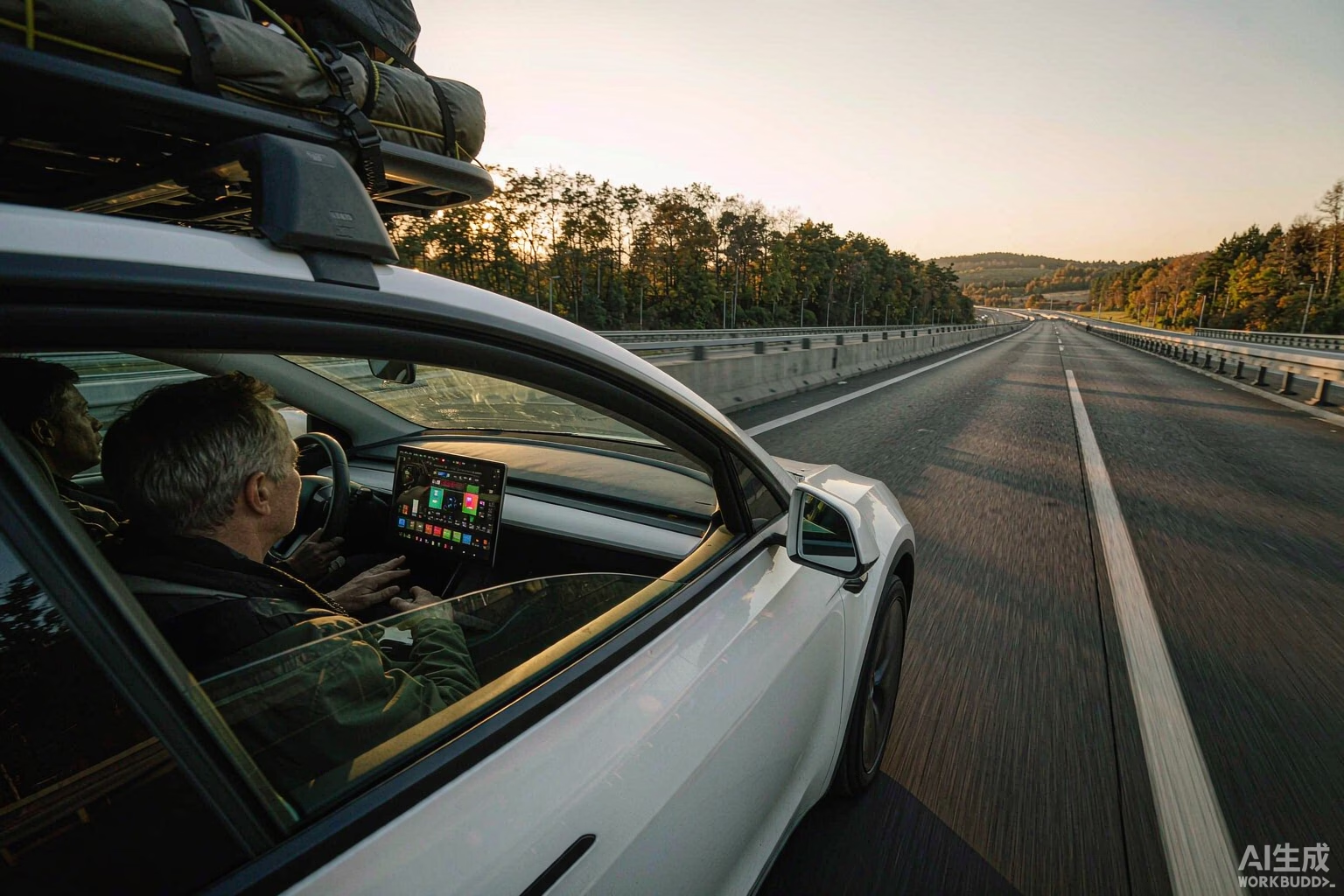
On Tuesday 6 October 2026, Germany’s Transport Minister Steffen Bilger said he is pushing for prompt EU-wide approval of Tesla’s assisted driving software, after discussing the technical details and liability questions with the company last month. Elon Musk’s reply on Wednesday was two words long: “Danke schoen.”
Germany is not just another vote. It is the largest car market in the EU and the home of Giga Berlin. With the Netherlands and Belgium already on side, this is the moment the argument shifted — but the deal Berlin struck comes with a detail that plenty of people will not like, and the EU vote is still not happening this month. Here is where it actually stands, and what any of it means for the drive to the campsite.
What Germany Agreed To
The sticking point all year has been the speed offset: the Europe-specific version of FSD approved by Dutch regulators can raise the car’s maximum speed by up to 50% above the limit it detects. Sweden objects. France objects. The European Transport Safety Council objected publicly on 29 September and wants the feature stripped out before any approval.
Germany’s answer is a compromise. Berlin has agreed with Tesla that the system may exceed the posted limit by up to 10% — a modest margin for things like flowing traffic — and it will take that position into the European process. Bilger also revealed that Tesla has offered to rename the product “Tesla Assisted Driving”, because regulators across the bloc think “Full Self-Driving” oversells what the system does. His stated goal is for Tesla drivers to get the benefits of assisted driving across the EU without delay.
That is genuinely new. A 10% tolerance is a different argument from a 50% one, and dropping a misleading name was always the cheapest concession available. Whether it buys fifteen votes is another matter.
The Timeline Nobody Voted For
Two things have not moved:
- The EU-wide vote has slipped from October to December at the earliest, because several member states want more testing done first.
- To pass, Tesla needs a qualified majority — 15 of 27 member states representing at least 65% of the EU population.
In the meantime, the country-by-country route keeps working. Eight European countries have independently recognised the Dutch exemption and switched FSD (Supervised) on:
| Country | Status |
|---|---|
| Netherlands, Lithuania, Estonia, Denmark, Belgium | Approved April–June 2026 |
| Slovenia | September 2026 |
| Czechia | September 2026 |
| Croatia | End of September 2026 — the eighth |
| Germany, plus NL/BE | Political support for the EU-wide vote |
| Sweden, France | Concerns, mainly the speed offset |
Worth being very clear about the distinction, because it gets blurred constantly: this is SAE Level 2 assistance. You stay legally responsible, hands ready, eyes on the road. Germany renaming the argument does not change that.
Why This Is Actually a Camping Story
Because the value of supervised driving is not interesting driving. It is the boring driving, and nothing in European camping is boring quite like the approach march.
Germans are Europe’s biggest camping nation by a distance — tens of millions get into a car and head south every year, including roughly 21 million overnight stays logged in Croatia alone in 2025. That means six to ten hours of Autobahn and Brenner motorway before the good bit starts. Anyone who has done Munich to the Adriatic knows the shape of it: two hours of interest at either end and a featureless middle where fatigue quietly accumulates.
That middle is precisely the part assistance handles well — holding a lane in heavy summer traffic, absorbing the endless roadworks, keeping a safe gap through the tunnels. Arriving with your attention left rather than spent is not a luxury; it is the difference between cooking properly and eating whatever the campsite shop sells.
Two caveats you should plan around:
- It does not travel. The Dutch framework is national. Drive from Germany into Poland or Austria and the feature is simply not enabled. Check which countries on your route are switched on before you assume anything.
- It arrives free, over the air. Nothing to buy, nothing to book. If you already own a compatible Tesla in one of the eight countries, the software comes to you.
While You Wait for December: Kit That Works in Every Country
Software arguments in Brussels will take their own time. Sleeping arrangements will not wait. If you are planning an autumn trip regardless of what gets voted on — and you should, the off-season rates across Southern Europe run roughly 30–50% below August — this is the short list that makes a self-sufficient base camp:
- Tesla Roof Top Tent — set up in minutes, off the damp, and usable on pitches with no facilities at all.
- 2048Wh LiFePO4 Portable Power Station — the difference between booking the €18 basic pitch and the €45 one with electricity. Over a week, it pays for itself.
- 35L Dual-Zone Compressor Fridge — a real fridge means real meals, and the nearest supermarket is always further away than the map suggested.
- Tesla Induction Cooktop — induction, no gas bottle, no naked flame near a tent fabric — noticeably safer than a camping stove inside an awning.
- Tesla Trunk Organiser Box — everything stops rattling, and you can find the kettle without unpacking the car.
- Tesla Inflatable Air Mattress — the fast answer when the forecast is good and nobody wants to assemble anything.
- Magnetic Mesh Bug Screens — keep the windows open for airflow on humid nights without letting everything with wings in.
The Bottom Line
Germany is now asking the EU to approve Tesla’s assisted driving, has quietly negotiated the speed margin down from 50% to 10%, and Tesla is willing to stop calling it self-driving. That is real progress toward a December vote — but it is December, not next week, and Sweden and France have not moved. None of it changes what you can do this weekend: eight countries already have the software on the road, it arrives free, and the boring middle of the drive south is already easier than it was. Sort the parts that Brussels cannot help with — the Tesla Roof Top Tent, the 2048Wh LiFePO4 Portable Power Station and the 35L Dual-Zone Compressor Fridge turn any pitch into a proper camp.