Europe Stopped Waiting for the Big Holiday — and One-Night Tesla Camping Is the Winner

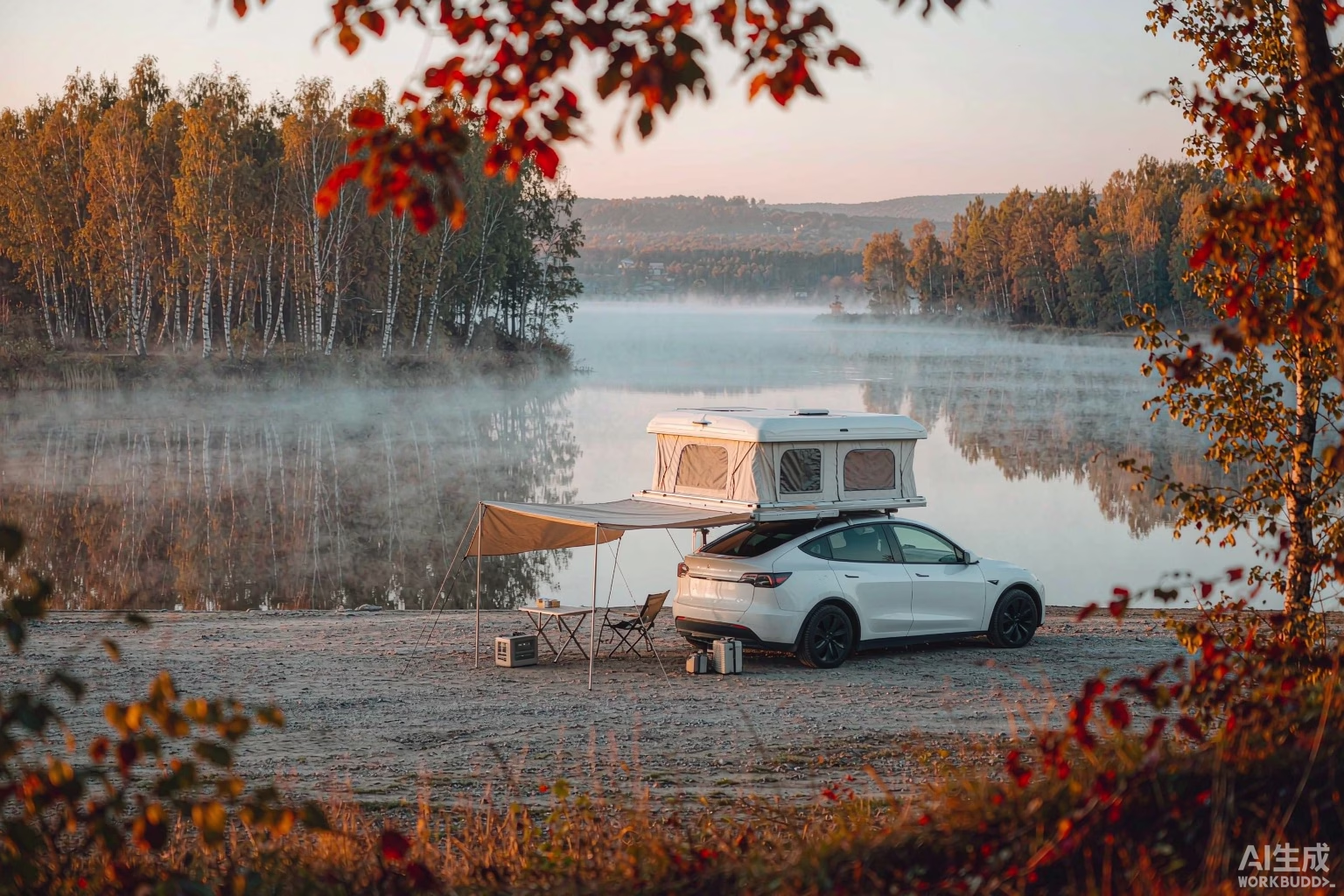
Here is the most telling number in European camping right now: 38% of all trips booked last year lasted exactly one night. Not a week. Not a fortnight. One night. And roughly one in ten stays was booked on the same day it started.
At the same time, the outdoor industry in Cologne has spent this month telling manufacturers that the future is “micro-adventures” — short, local, low-kit trips — and diesel across the EU just jumped again. Put those three things together and one vehicle starts to look almost suspiciously well suited to how Europeans actually camp now: a Tesla.
The Numbers: Shorter, Closer, Sooner
Pitchup.com, which lists around 6,000 campsites across more than 70 countries and passed a million annual bookings after its biggest summer on record, published its 2026 outlook from its own booking data. The pattern is unmistakable:
| Signal | 2025 figure |
|---|---|
| Stays booked for the same day | 10% of all stays |
| Trips lasting one night | 38% of all trips |
| Average trip length | down 4% |
| Domestic bookings | up 3% |
| Solo travellers | up 39% year on year |
The founder, Dan Yates, put it plainly: travellers are no longer waiting for the big vacation — they are taking advantage of small windows of time to reset outdoors, often closer to home. Two other findings are worth knowing if you are picking a destination: Hungary camping bookings rose 117% in 2025, and two of the five most-booked campsites were on working farms.
The Industry Has Noticed — Gear Is Now Built for Everyday Use
The trade press around the Cologne outdoor fair (spoga+gafa) made the same point from the manufacturing side in late September. The words that keep appearing are lightweight, space-saving and multifunctional, and the trend has a name: micro-adventure.
Brian Nelson of US manufacturer Westfield Outdoors described the shift most clearly — the biggest change is that a lot of gear is no longer sold purely as camping gear. It is designed so you can have near-home comfort in your everyday surroundings, which means simpler, lighter, more convenient products. Concretely, the things being pushed for 2026 are:
- Foldable solar panels and high-capacity solar power banks for continuous off-grid power.
- Camping lanterns that double as charging stations, with a digital display showing remaining battery.
- Passive coolers that need no electricity, keep food cold for days and work as a seat.
- Filter bottles and portable water purifiers for remote routes.
- Furniture and storage boxes sized for specific vehicle models, and coolers that fold to a third of their size.
Read that list again — it is basically a description of what an electric car already does, plus a few things you can buy to finish the job. A Tesla is a silent, fume-free, always-on power source that heats or cools itself all night without a generator. The industry is designing for people who own one.
And Diesel Just Got Dearer Again
The third piece of the puzzle is money. Across the 27 EU countries, diesel rose by an average of 1.85% between 19 and 27 September alone. In Germany a litre now costs around €2.50 — about 15% more than at the end of July.
That matters more for short trips than long ones. A one-night trip is mostly short hops, and short hops are exactly where a combustion engine is at its least efficient and an electric car at its best. Charging at home overnight before you go, then driving two hours out and two hours back, is close to the cheapest motoring available in Europe right now — and unlike diesel it does not move much week to week.
Overnight, Camp Mode typically uses around 1% of the battery per hour — roughly 8–10% for a full eight-hour night in mild weather, and closer to 15% if it is freezing and you have the heating up. Arrive with 100 km of range spare and you will wake up with plenty.
The One-Night Kit: Less Than You Think
The whole point of a micro-adventure is that it does not need planning. That only works if the car is permanently ready, so the goal is a kit you leave in the boot rather than a kit you pack:
- Tesla Trunk Organiser Box — everything lives in one place, so “let’s go tonight” is a five-minute decision, not a packing project.
- Tesla Roof Top Tent — up off damp ground and asleep in minutes, which is the difference between a 6am start and a lie-in.
- Tesla Inflatable Air Mattress — the zero-effort option for the nights you just want to fold the seats and sleep.
- 2048Wh LiFePO4 Portable Power Station — your own power anywhere, which is what makes a same-day booking possible at all.
- 35L Dual-Zone Compressor Fridge — cold drinks and breakfast sorted without finding a shop.
- Tesla Induction Cooktop — a hot meal with no flame, allowed on every pitch in Europe.
- Magnetic Mesh Bug Screens — windows open for airflow, insects outside.
The Bottom Line
Europeans are not waiting for August any more. A third of trips are a single night, one in ten is booked that morning, and the outdoor industry has reorganised itself around light, compact, everyday-usable gear. Meanwhile diesel went up again before the month was out. A Tesla is the rare vehicle that gets better the shorter and more spontaneous the trip is: charge at home, drive two hours, sleep warm and silent, drive back. Keep a Tesla Trunk Organiser Box and a 2048Wh LiFePO4 Portable Power Station in the boot and the decision to go takes about as long as deciding what to have for dinner.