Europe’s Camping Boom Has Gone Car-Shaped — and Your Tesla Is Already the Cheapest Way In

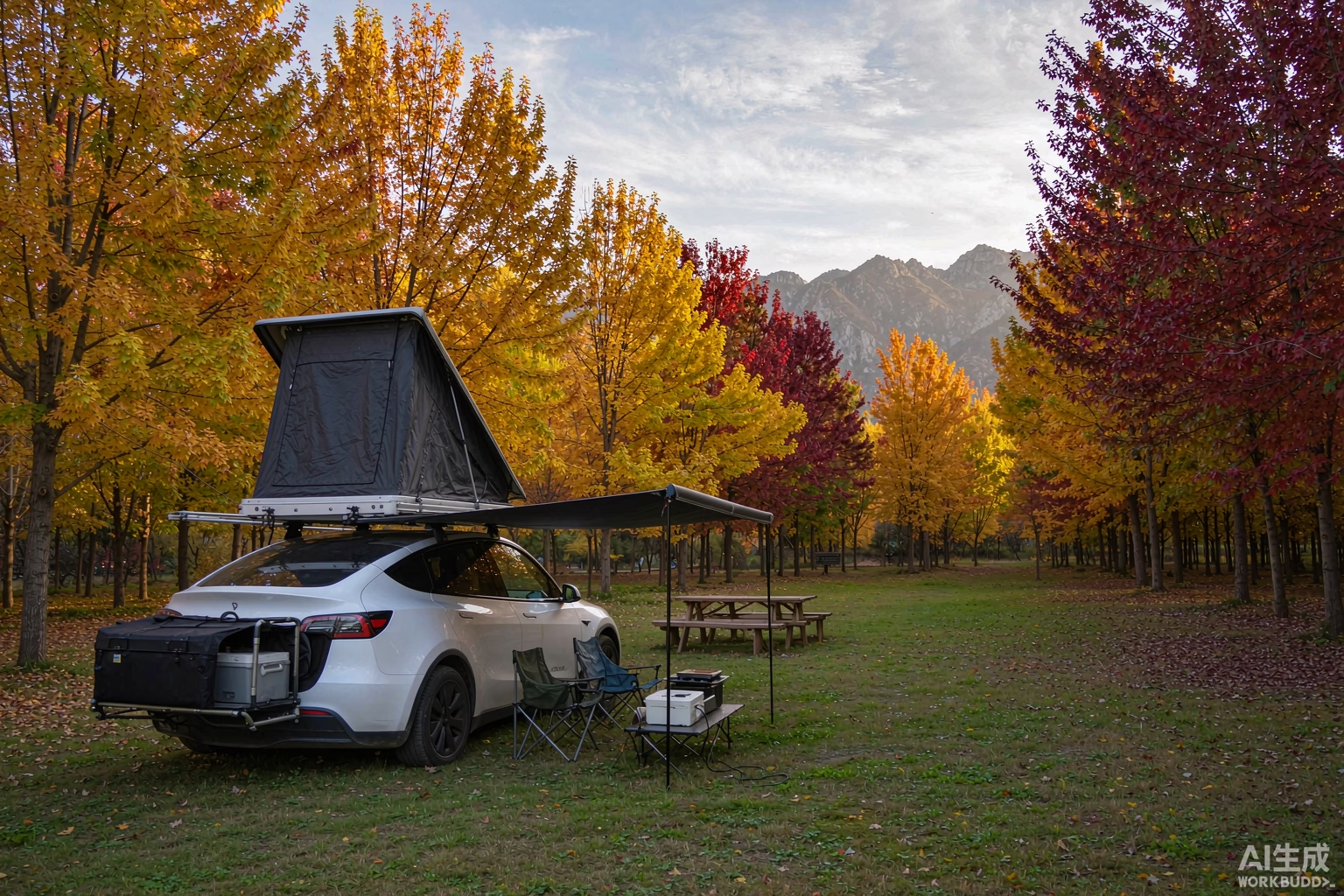
Two small stories this autumn say something big about how Europeans camp now. In Düsseldorf, the continent’s largest camping show closed its 65th edition with more than 259,000 visitors and a third of them total beginners. And in the Netherlands, a shop has built its entire business around letting you rent a rooftop tent before you commit to buying one. Meanwhile the cleverest new camper kit costs €22,000 and does not ship until 2027. There is a much cheaper way in — and it might already be parked outside your house.
The Show: Bigger Than Last Year, and Full of Newcomers
Caravan Salon in Düsseldorf is the industry’s annual reality check, and the 2026 edition delivered an optimistic one despite a nervous wider economy. The final numbers:
| Measure | 2026 result |
|---|---|
| Visitors | 259,000+ |
| Exhibitors | 834 companies from 41 countries |
| Space | 15 halls plus outdoor grounds |
| First-timers | roughly one third of visitors |
| Buying intent | around 50% arrived with concrete purchase plans |
Organisers made a point of saying the crowd held up even with people being more careful about big purchases — and the industry association chair called the footfall in the halls “good” with lots of serious conversations at the stands.
The interesting part is how the floor was organised. Alongside the usual motorhomes, the official theme worlds included StarterWelt (for people brand new to this), self-conversion adventure, equipment and outdoors, and — tellingly — rooftop tents and off-road as its own dedicated area. This is no longer a niche corner. Sleeping on top of your own car is now a mainstream category with an entire hall section.
The Rental Counter: Try It Before You Buy It
Here is the detail that says the most. In Kampen, in the Netherlands, Nelisa and Erik Boone built a business called Freelife Adventure from nothing but their own family holidays — and the core of it is a rental service for rooftop tents.
The idea is obvious once you hear it. A rooftop tent is a €1,000–€4,000 decision, and the question everyone asks is: will we actually use this? Their answer is to rent one first, go away for a weekend or a couple of weeks, and find out. If you then buy, part of what you paid in rent comes off the tent.
They stock three very different kinds, which is a neat summary of the whole market:
- Vickywood — comfortable mattress, clever storage, quick setup. The weekend-trip option.
- Camp Ready — robust and unfussy, built for leaving at a moment’s notice.
- James Baroud — premium, made in Europe, hardshell, properly ventilated, built for bad weather and heavy use.
They also advise on roof bars and will mount the tent for you. That last bit matters: half the hesitation people have about rooftop tents is not the tent, it is whether it will fit their car.
Then There’s the €22,000 Kit That Ships in 2027
On the other end of the price scale, a South Tyrolean startup called Vanna Camp showed its Cubivan Camping System at Düsseldorf. It is genuinely clever: rigid insulated modules that slide into an ordinary van — VW Caravelle, Ford Tourneo Custom, Mercedes Vito — with a pop-up solid roof giving a 2 x 2 m bed, and a pull-out rear unit with a 90 cm kitchen worktop, plus a toilet and a 90 x 95 cm shower. Because nothing is glued in, the whole thing can be lifted out and moved to another van later.
Three things to note before you get excited:
- Price is around €22,000.
- Pre-orders run until 31 December 2026; sales start in early summer 2027.
- Core specs — water tank size, fridge capacity, the energy system — have not been announced yet.
So it is a promising product you cannot buy, cannot price accurately, and cannot sleep in until next summer. It is a good illustration of where camping is heading: people want their normal daily vehicle to become a camper, and they want it without a second car.
You Already Own Half the Answer — Finish It
That is the whole direction of travel: camping has gone car-shaped. The industry is building rental counters for beginners because demand exploded, and building €22,000 conversion kits because people refuse to buy a motorhome they only use four weeks a year.
If you drive a Tesla, you already have the hard parts sorted. A flat load floor and a boot that swallows everything, a front trunk for the wet and smelly stuff, silent climate control all night with no generator, no gas bottle and no carbon monoxide risk, and no worry about low-emission zones in any city you pass through. What is missing is a short list:
- Tesla Roof Top Tent — sleeping off the ground, up where the air moves and the view is better. No €22,000, no waiting until 2027.
- Tesla Inflatable Air Mattress — keep it as a plan B for the nights you cannot be bothered to set the tent up.
- Tesla Trunk Organiser Box — the difference between “we’ll pack Friday” and actually leaving Friday.
- 2048Wh LiFePO4 Portable Power Station — your own mains socket anywhere, which is what makes pitch choice irrelevant.
- 35L Dual-Zone Compressor Fridge — real food, cold drinks, several days away from a supermarket.
- Tesla Induction Cooktop — hot dinner with no flame, allowed on every pitch in Europe.
- Magnetic Mesh Bug Screens — windows open for airflow in autumn, with the midges staying outside.
The Bottom Line
A third of the 259,000 people who walked around Düsseldorf this year had never camped before, and the shops have started letting you rent before you buy because nobody wants to gamble on the wrong setup. The smart new hardware costs €22,000 and ships next summer. Or you can put a Tesla Roof Top Tent and a 2048Wh LiFePO4 Portable Power Station on the Tesla you use every day and be at a lakeside pitch this weekend — which is, rather quietly, the best deal in European camping right now.