Tesla Just Doubled Its Free Kilometres in Europe — Here’s What That Means for Campers

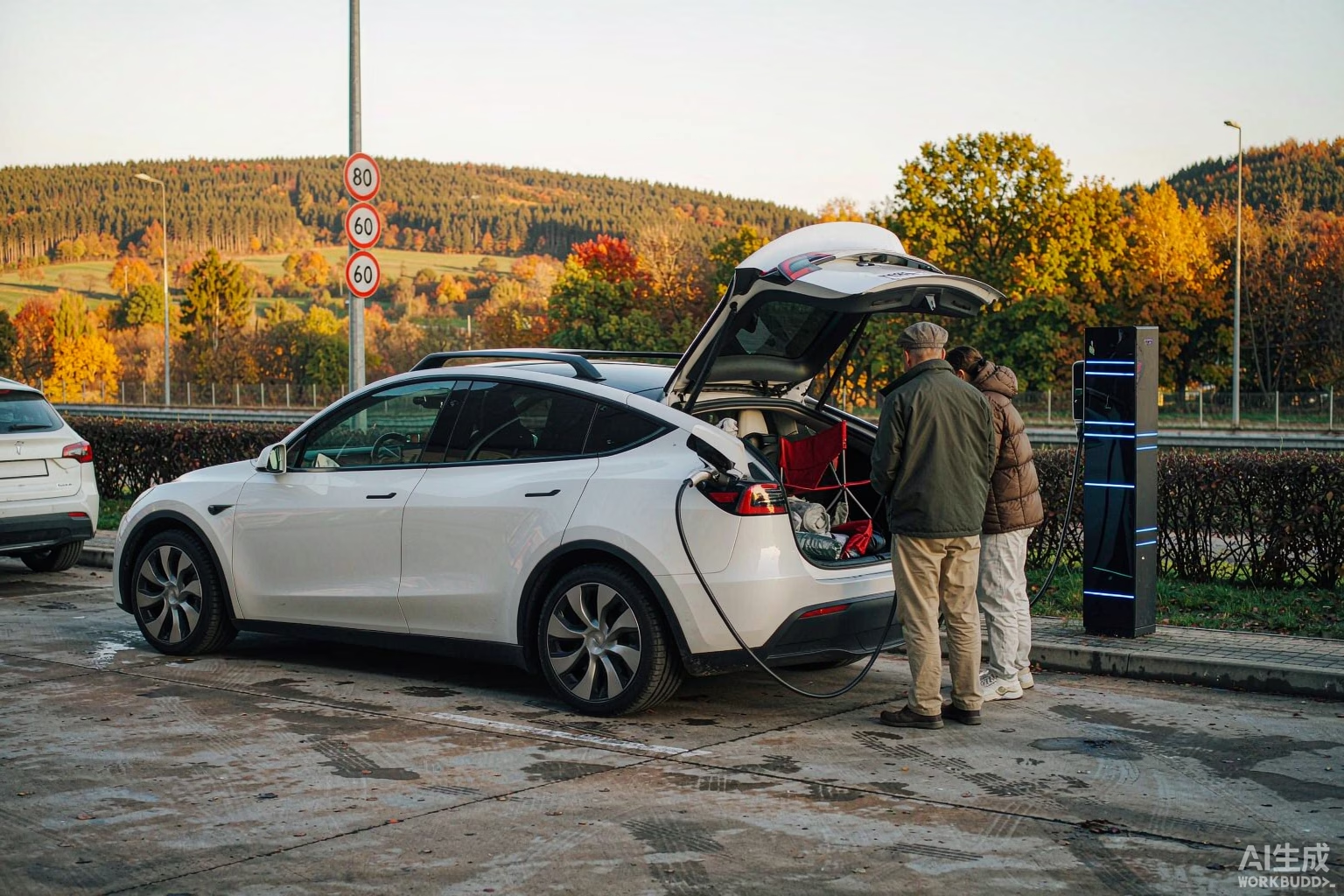
Tesla has quietly doubled one of its best perks for European buyers. The referral reward in key European markets — Germany among them — has gone from 1,000 km of free Supercharging to 2,000 km, and here is the part people miss: both the new buyer and the person who referred them get it. That is roughly 1,300 miles of free motorway, which happens to be almost exactly the distance of a proper autumn camping trip there and back. Let’s do the maths on what you actually get.
What Changed, in Plain Numbers
The change was first spotted this month by EV watchers on social media and reported across Tesla-focused outlets. The structure is simple:
| Item | Before | Now |
|---|---|---|
| Free Supercharging for the buyer | 1,000 km | 2,000 km |
| Free Supercharging for the referrer | 1,000 km | 2,000 km |
| Rough equivalent in miles | ~620 mi | ~1,240 mi |
A word of caution, because we would rather you were not disappointed: Tesla’s referral programme is famous for appearing, vanishing and reappearing in a new shape. It has been switched off entirely before. In the United States the company has shifted the reward away from cash discounts towards things like free months of Full Self-Driving. In Europe it is still built around free kilometres, but nobody outside Tesla knows how long the current version lasts. Always check the exact terms on your own country’s order page before counting on it.
What Is 2,000 km Actually Worth?
Free kilometres are abstract until you turn them into euros. A Model Y driven at normal motorway speeds uses somewhere around 15 kWh per 100 km in mild autumn weather. Run that over 2,000 km and you get roughly 300 kWh of electricity you are not paying for.
European Supercharger rates vary a lot by country — anything from around €0.35 to €0.50 per kWh depending on where you plug in. At those rates, 2,000 free kilometres is worth roughly €100 to €150 of charging you can spend on something else. Which is to say: your fuel budget for a two-week autumn trip is effectively covered before you leave the driveway.
Put another way, here is what fits inside 2,000 km:
- Amsterdam → Lake Garda → Amsterdam — about 2,000 km round trip, so the entire drive there and back.
- Munich → Croatian coast → Munich — comfortably inside the allowance, with enough left for running around once you arrive.
- Six or seven weekend camping trips of about 300 km each across a whole season.
And unlike a discount off the purchase price, this perk keeps paying you back every time you stop at a Supercharger — which, if you camp, is exactly where you stop anyway.
Why Now: Europe Is Getting a Lot More Model Ys
Incentives usually appear when supply needs a push, and supply here is genuinely ramping. Tesla’s plant near Berlin announced another 1,000 hires this September — the third headcount expansion there this year — with Brandenburg’s economic development agency putting total job creation from this expansion phase at up to 3,500 positions (around 1,500 of them tied to battery cell production).
The production ladder has been walked up step by step rather than in one jump:
| Stage | Output |
|---|---|
| Earlier this year (first hiring round) | 5,000 → 6,200 cars per week |
| Current | around 6,200–6,500 cars per week |
| Target for October 2026 | 7,500 cars per week |
To get there, German media reported the plant ordered mandatory extra shifts on 18, 19 and 25 September, and engineering has already cut the line’s cycle time from roughly 80 seconds per car down to around 45. There is also €250 million going into scaling local 4680 battery cell output from 8 to 18 GWh a year.
For anyone reading this as a camper rather than an investor, the takeaway is unglamorous but useful: more European-built cars mean shorter waits and a bigger used market if you are shopping for your first camping Tesla this autumn. More Teslas on the road also means a bigger community to swap route tips and Supercharger stops with.
Turn Free Kilometres Into a Better Trip
Free charging solves the boring half of the problem — getting there. The other half is making arrival worth it, and that is mostly about not arriving tired and not faffing about in the dark. A short kit list handles it:
- Tesla Roof Top Tent — the single upgrade that turns a car into a camper. Up off cold, damp ground, and ready to sleep in minutes.
- Tesla Inflatable Air Mattress — fold the seats, inflate, sleep. A real mattress beats a sleeping bag on a folded bench every time.
- Tesla Trunk Organiser Box — everything has a slot, so unpacking at 9pm takes two minutes instead of twenty.
- 2048Wh LiFePO4 Portable Power Station — run your camp off your own battery so you never eat into the range you just drove in on.
- 35L Dual-Zone Compressor Fridge — cold drinks and food that survives four days without a campsite shop.
- Tablet Mount Holder — keep the route and the pitch booking at eye level instead of balanced on a knee.
The Bottom Line
2,000 km for you and 2,000 km for whoever pointed you at Tesla. Roughly €100–150 worth of charging, or an entire autumn road trip from northern Europe to the Mediterranean and back. Check the terms for your country, don’t assume it lasts forever, and don’t buy a car you weren’t going to buy just for the perk. But if a Tesla was already on your list, this is about as good as the timing gets — the factory next door is building them faster than ever, and the first Tesla Roof Top Tent deserves a proper trip to christen it.