Tesla Just Made Cold-Weather Camping Better — and It’s Building More Model Ys Than Ever

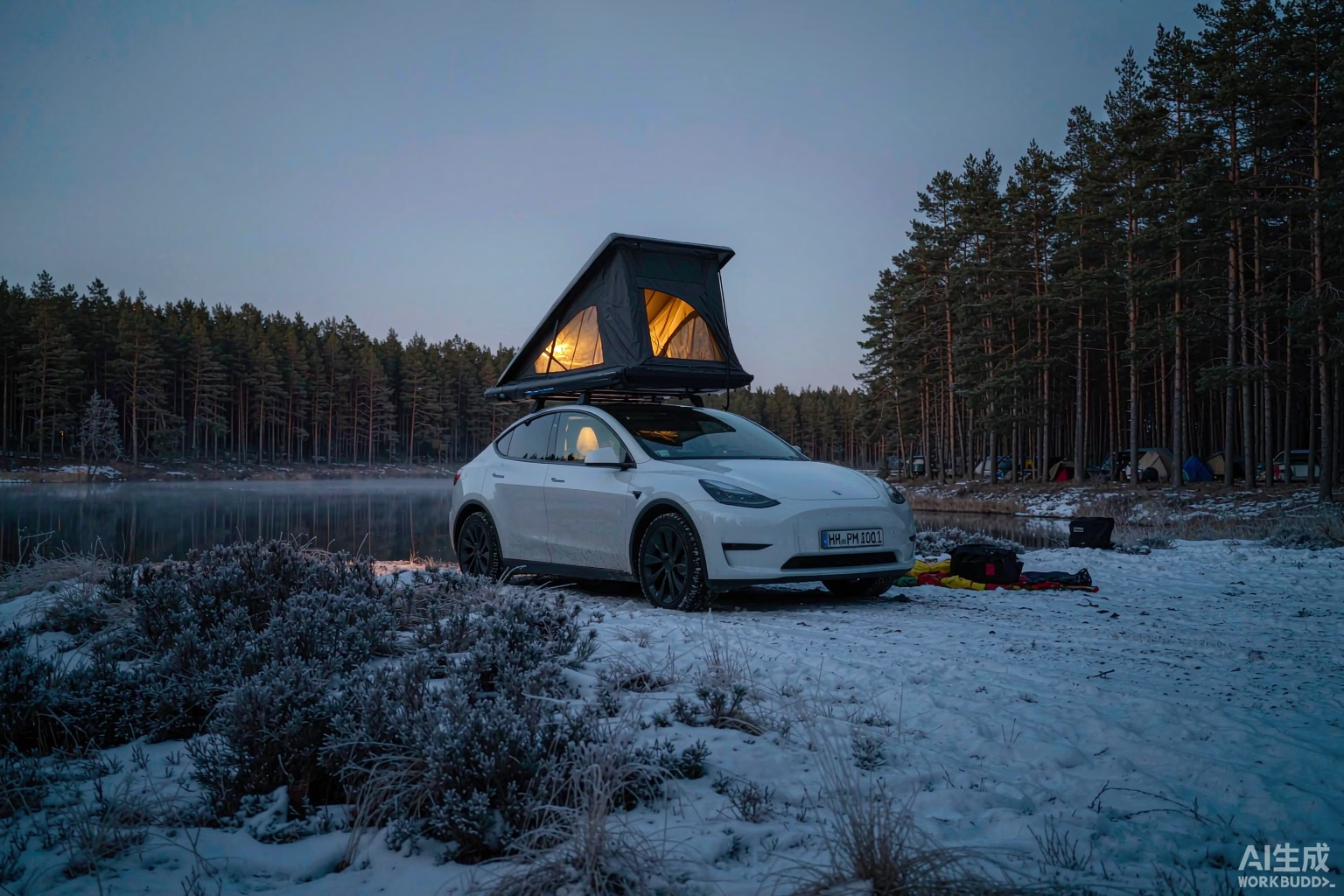
Two bits of Tesla news landed in early September 2026 that matter more for campers than they first look. First, Gigafactory Berlin is gunning for 7,500 Model Y cars a week by mid-October — a roughly 50% jump from where it stood six months ago. Second, the Super Manifold V2 thermal system is now standard on European Model Ys rolling off the line. On paper that’s a boring under-the-hood part. In practice it’s the thing that makes sleeping in your Tesla on a frosty night noticeably cheaper and cosier. Here’s why it’s good news for anyone who camps outside summer.
Giga Berlin Is Going Into Overdrive
Tesla’s German plant built about 61,000 Model Ys in Q1 2026 (a ~5,000-a-week run rate), added a ~6,000-a-week step in July, and now has a concrete target of 7,500 units a week from mid-October. That’s backed by around 3,500 new jobs and special shifts already running. In plain terms: the refreshed (Juniper) Model Y is selling faster in Europe than Berlin can currently build it, so supply is about to get a lot healthier.
- Shorter waits. Summer 2026 orders should clear faster going into autumn — handy if you want a camping car before the cold-season trips.
- More Model Ys on the road. Every extra car is another family that discovers the flat-fold cabin + Camp Mode combo.
- The same great camper. The production boost doesn’t change the bones that make it a base camp: huge boot, frunk, and Camp Mode.
The Quiet Upgrade: Super Manifold V2
The Super Manifold V2 is a redesigned heat-pump thermal module that packs 15–20 separate components (refrigerant lines, valves, coolant routing) into one integrated unit. Confirmed on an August 27 Giga Berlin build, it’s now embedded in the European production line. Why should a camper care? Because it manages three things at once — battery temperature, drive-unit heat, and cabin HVAC — with fewer leak points and less wasted energy.
- Better cold-weather range. A more efficient heat pump loses less energy to plumbing overhead, so the battery’s warmth goes further on a January morning in the Alps or Scandinavia.
- Faster cabin warm-up. Tighter integration redirects heat to the cabin in the first minutes of a drive — no more teeth-chattering starts.
- Long-term reliability. Fewer joints and seals means fewer things to degrade over years of camping abuse.
What This Means for Cold-Weather Camping
Camp Mode holds a comfy cabin temperature all night using the big battery — no gas, no fumes, no generator. The catch has always been drain. A smarter heat pump trims that drain, which means:
| Condition | Old Camp Mode drain (8 hrs) | With efficient V2 heat pump |
|---|---|---|
| Mild night (10–15°C) | 6–10% | A little less, more stable |
| Cold night (below 5°C, heating on) | 15–24% | Less wasted energy, steadier warmth |
| Freezing (-5°C and lower) | 25–30%+ | Better retained range for the next drive |
Numbers vary by car and weather, but the direction is clear: the same cosy night costs a bit less battery, leaving more miles for tomorrow’s drive. For off-grid stays, a 2048Wh LiFePO4 Portable Power Station (2048Wh) recharges free every Supercharger stop and runs your 35L Dual-Zone Compressor Fridge and cooktop without touching the car — so the cabin battery stays for sleeping.
The Kit That Loves the Cold
- Tesla Inflatable Air Mattress — the flat-fold cabin becomes a proper insulated double bed.
- Tesla Roof Top Tent — sleep up top, leave the warm cabin free for the family, and you’re off the cold ground.
- Tesla Induction Cooktop — a hot meal with zero gas and zero smoke, perfect when fires are banned.
- 2048Wh LiFePO4 Portable Power Station + 35L Dual-Zone Compressor Fridge — the off-grid power and cold-storage backbone for multi-night winter stops.
- Tesla Trunk Organiser Box — keeps cables, cooking kit and wet gear from turning the boot into a jumble.
The Bottom Line
Tesla is both building more Model Ys than ever (Berlin heading for 7,500 a week) and making the ones it builds better in the cold (Super Manifold V2 standard). For campers that’s a double win: easier to get the car, and cheaper to sleep warm once you have it. Add an air mattress, a roof tent, a portable power station and a compressor fridge, and the most popular electric camper in Europe just became an even better one for the shoulder season and beyond. Winter camping in a Tesla was already the cleanest, safest way to do it — now it’s a little more efficient, too.