Drought-Proof Camping: How to Beat Europe’s Record 2026 Heatwave in a Tesla

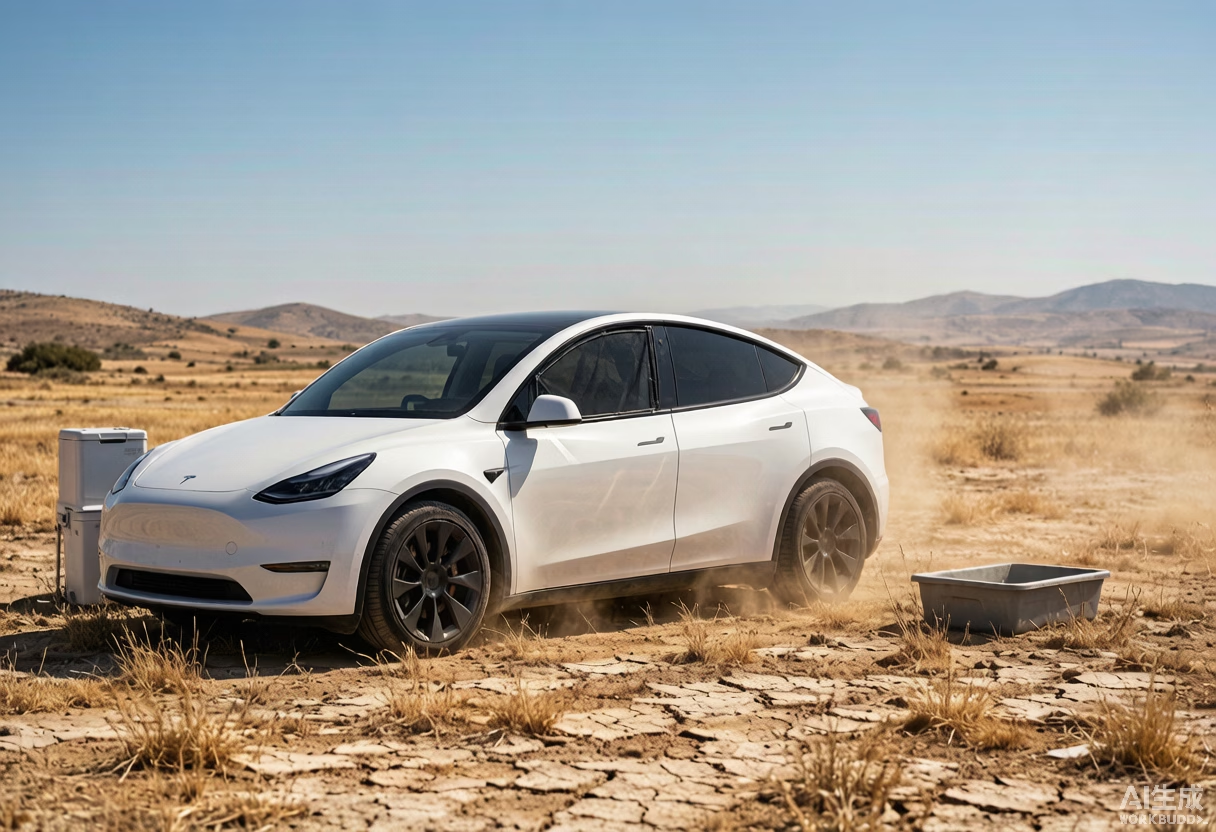
Europe is having its hottest, driest summer on record, and it is rewriting the camping rulebook. England and Wales just logged their driest July since records began in 1836. More than 25 million people across England and Wales are under hosepipe bans. The River Rhine at Kaub dropped to 24 cm — the lowest level measured since 1880. Slovakia hit 42.2°C and Austria 41.2°C, both all-time national records, and 25 of Italy’s 27 major cities sat under the highest “red” heat alert in early August.
If you were planning a Southern European camping trip this August, the smart move is simple: head north, and camp water-wise. And it turns out a Tesla is one of the best possible vehicles for exactly that.
Why an EV Camper Handles a Drought Better
Most “summer camping” problems are really water problems: washing the car, filling the pool, rinsing dishes, long showers. An electric camper setup sidesteps most of them:
- No hosepipe needed. A Tesla does not get “washed” at a campsite tap — pack waterless detailer wipes. You skip the ban entirely.
- Power comes from the grid or your battery, not from burning fuel you queued for. During a heatwave, fuel logistics get stressed too; charging does not.
- Camp Mode keeps you cool without a noisy, fuel-hungry generator — just battery, silently.
- A good fridge means fewer supply runs, so you are not burning miles (or water at rest-stops) every day for cold food.
None of this uses the hosepipe the bans are about. That is the whole trick: camp in a way that barely touches the water supply at all.
Camping Under Water Restrictions: Practical Tips
Where bans are in force (much of England and Wales, and tightening across the south), campsites are rationing showers and banning pool filling. Adapt like this:
- Cook without water where you can. Our Tesla Induction Cooktop is induction — no open fire risk during the dry-spell fire bans, and you are not boiling pans of water just to heat a meal.
- Bring your own cold storage. A 35L Dual-Zone Compressor Fridge means you buy ice-cold food once and stop relying on campground freezers and fridges that sites may switch to economy mode during the crisis.
- Keep gear organised and dry. A Tesla Trunk Organiser Box stops damp kit and sandy clothes mixing with clean supplies in the boot — handy when you cannot rinse things off at the site.
- Go off-grid for a night or two. A 2048Wh LiFePO4 Portable Power Station (2048 Wh) runs your cooktop, lights and phone charging without drawing from a strained campsite supply.
- Shower at paid facilities, not the pitch tap, and reuse grey water for boot cleaning if the site allows it.
Go North: The Cool, Wet Side of Europe
The weather maps for mid-to-late August 2026 are blunt: southern and central Europe stay hot and bone-dry, while Northern Europe stays cooler and greener. That overlaps almost perfectly with the five FSD-trial countries from our first article — which is not a coincidence. Our drought-proof shortlist:
| Destination | Why now | Water situation |
|---|---|---|
| Denmark (west coast, islands) | Cool sea air, free primitive campsites, long light | Comfortable — no bans |
| Estonia & Lithuania (Baltic forests, lakes) | Green, uncrowded, free RMK camping areas | Normal — wetter than the south |
| Netherlands (coast, islands) | Flat easy driving, Fastned everywhere | Local restrictions only |
| Belgium (Ardennes) | Shaded forests, rivers, twisty scenic roads | Mostly normal |
| Northern UK (Scotland, Yorkshire) | Escape the south’s hosepipe bans entirely | Scotland largely unaffected |
If you must travel south, do it in late September or October (the “shoulder season”): the heat eases, the crowds thin, and water stress usually lifts after autumn rain. Avoid the red-flag Bison Futé weekends if you cross France.
Heatwave Camping Safety in a Tesla
Even up north, a few hot days are likely. Your Tesla handles them well:
- Camp Mode holds a set cabin temperature all night. Expect roughly 12–16% battery drain on a hot night (6–10% on a mild one).
- Pre-condition while plugged in so you start cool and full.
- Park in shade — “emplacements ombragés” if you are in France — to cut A/C load.
- Keep the Magnetic Mesh Bug Screens on so you can leave windows cracked for airflow without inviting insects.
- Watch official alerts: Meteoalarm, Météo-France, DWD WarnWetter, AEMET and the Met Office all publish heat and fire-risk warnings.
Metal-bodied and sealed, a Tesla is a safe, climate-controlled refuge during a heatwave — far better than a tent when the thermometer will not drop at night.
The Takeaway
Europe’s 2026 drought is a real planning factor, not a reason to stay home. Camp water-wise: an EV setup that needs no hosepipe, a fridge that cuts supply runs, and a route that favours the cool north. Pair it with the free FSD trial if you are in one of the five launch countries, and you have a late-summer trip that is comfortable, legal, and quietly smug about its water footprint.
Stay cool, stay north, and let the battery do the sweating.