Perseid Meteor Shower 2026: Why a Tesla Is the Best Mobile Observatory in Europe

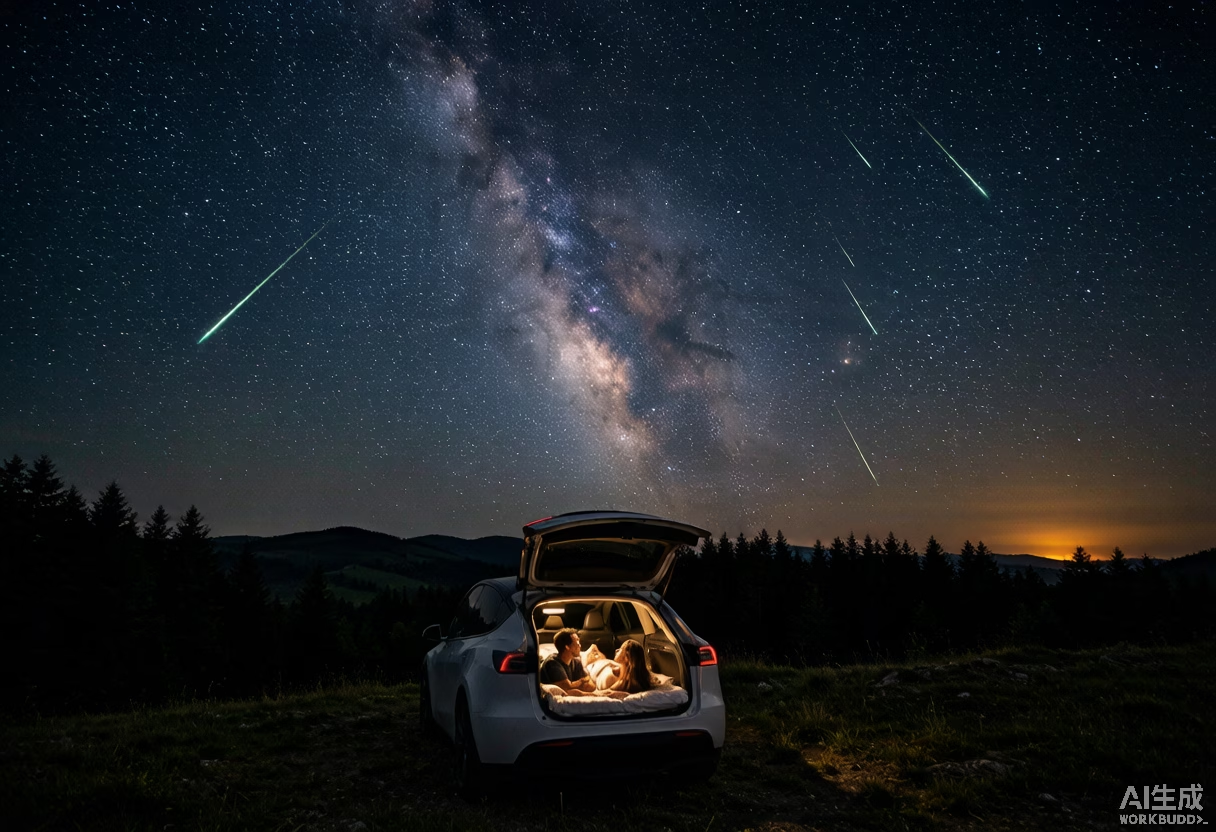
The Perseid meteor shower is back. This year it peaks on the night of 12–13 August 2026, and the timing could hardly be better. The Moon is in its new phase on 12 August, so the sky stays pitch-black from dusk until dawn. Astronomers have been calling this the best Perseid year in a decade, with rates of 60 to 100 meteors per hour possible under a dark sky.
Even better, eclipse chasers will already be on the road: a total solar eclipse crosses Iceland and Spain the same day. If you miss the eclipse path, you can still chase the Perseids. And if you own a Tesla, you already own one of the most comfortable mobile observatories on the road.
Here is how to turn a Model 3, Model Y or Model X into a base camp for the best meteor show of the summer.
Why a Tesla Works Brilliantly for Meteor Watching
Meteor watching is simple in theory: lie down, look up, and wait. In practice it gets cold, dewy and uncomfortable fast. A Tesla fixes most of those problems without ruining the experience.
- No engine noise, no exhaust fumes. You can keep the climate on all night and the car is still silent. Camp Mode holds a steady temperature while using only 6–10% of the battery per eight hours.
- The glass roof is a natural planetarium. Front-seat passengers can watch the sky directly through the panoramic roof. Rear passengers with the seats folded flat can see even more of it.
- No light pollution from the car. Set the screen to dark mode, dim the cabin lights to zero, and the car disappears into the background while your eyes adapt.
- You can power your gear. Charge a camera, a star tracker, a red headlamp and your phone from the car while you sleep. Our 2048Wh LiFePO4 Portable Power Station is plenty for a multi-night astro trip.
If you want to lie flat, the Tesla Inflatable Air Mattress turns the folded rear seats into a proper bed, and the Magnetic Mesh Bug Screens let you keep the windows open for airflow without letting mosquitoes in.
Where to Go: Europe’s Best Dark-Sky Tesla Campsites
Light pollution is the enemy. A bright meteor shower under a city sky is still nice, but under a true dark sky it becomes unforgettable. These spots are reachable by Tesla and have either official campsites or legal overnight parking:
- La Palma, Canary Islands, Spain — One of the world’s premier dark-sky reserves. Warm nights, clear Atlantic skies, and Superchargers on the island. Book a campsite early.
- Alqueva Dark Sky Reserve, Portugal — The world’s first Starlight Tourism Destination. Huge artificial lake, quiet rural roads, and excellent stargazing campsites.
- Galloway Forest Park, Scotland — The UK’s first Dark Sky Park. Mid-August nights are short but genuinely dark. Bring warm layers and a midge plan.
- Brecon Beacons / Eryri, Wales — Easy Supercharger access in South Wales, dark skies, and plenty of small campsites.
- Northumberland National Park, England — England’s darkest National Park. Perseus rises early here, so you catch more meteors sooner.
- Pic du Midi area, French Pyrenees — High altitude means thinner air and steadier seeing. The observatory is famous; nearby campsites are less famous and much cheaper.
The 2026 Viewing Window: What the Science Says
The Perseids are active from 17 July to 24 August, but the peak is the night of 12–13 August. The American Meteor Society predicts the maximum around 14:53 UTC on 13 August, which means the pre-dawn hours of Thursday are prime time for Europe.
| Time window | What to expect |
|---|---|
| 22:00–00:00 | Radiant rising; 20–40 meteors per hour from a dark site |
| 00:00–02:00 | Rates climb; 40–60 meteors per hour |
| 02:00–dawn | Peak window; 60–100+ meteors per hour |
| August 11–12 | 70–80% of peak, still excellent |
| August 13–14 | 70–80% of peak, good backup night |
The radiant is in the constellation Perseus in the north-eastern sky, but meteors can appear anywhere. The trick is to look at a wide patch of sky, not stare at one spot.
Setting Up the Car as an Observatory
Small details make a big difference when you are trying to keep your night vision.
- Enable Camp Mode and set the temperature to something comfortable but not warm. A cooler cabin means less dew on the windows.
- Fold the rear seats flat and inflate the mattress. This gives you a stable platform for binoculars or just lying back.
- Mount a tablet on the dash with our Tablet Mount Holder and run an app like Stellarium or Sky Guide. Keep the screen brightness on minimum and switch it to red/night mode.
- Use red light only outside the car. A standard white torch resets your dark adaptation in seconds. Your phone’s red-light filter or a headlamp with a red LED is much better.
- Open the windows slightly behind the mesh screens to stop condensation. The screens also keep midges and mosquitoes out.
- Keep camera gear in the Tesla Trunk Organiser Box so nothing rolls around while you drive to the next dark spot.
Final Thought: Book the Night, Not Just the Day
Most summer road trips are built around daylight hours: beaches, hikes, towns, restaurants. Astro camping flips that. The reason you are there begins at 22:00 and runs until 04:00.
A Tesla makes that shift easy. Climate control, a flat bed, a silent power source and a glass roof mean you do not have to choose between comfort and the sky. You can have both.
And if the weather turns cloudy on the 12th, remember the Perseids are still worth watching on the 11th and the 13th. The show is forgiving. The dark skies are not — so leave the cities behind.